Monday, June 5

Ode to the missing but not forgotten


Lori Culbert
Vancouver Sun

Monday, June 05, 2006

VANCOUVER - The grandfather of a missing woman whom pig farmer Robert (Willy) Pickton has been accused of murdering hopes a powerful song penned by famed poet Susan Musgrave will raise money to help other troubled women.

"It's a gift from Andrea to the missing women," an emotional Jack Cummer said about the song Missing, which Musgrave wrote in memory of his granddaughter Andrea Joesbury.

The song is a collaboration of Musgrave's poignant lyrics, Galiano Island guitarist Brad Prevedoros' haunting music, and the captivating voice of singer Amber Smith.

Proceeds from the sale of the CD ($18.50 out of the $20 price tag) will go to Haven Society, a Nanaimo-based non-profit organization that for 28 years has been helping women and children escape violence and sexual exploitation.

Cummer said the song, and his fundraising effort, are not about what happened to Joesbury, but he hopes it will stop other girls and women from being lured into dangerous lifestyles.

Joesbury is one of 26 sex-trade workers whom Pickton is accused of murdering. Another 40 women remain missing, after vanishing from Vancouver's drug-infested Downtown Eastside since 1978.

And the issue is not Vancouver's alone. Vulnerable women continue to disappear or turn up dead in Edmonton, and on the so-called Highway of Tears between Prince George and Prince Rupert.

"Awareness, that is the key word. This is the future that we're talking about. They keep talking about the Highway of Tears. Why are these kids leaving home? That's the subject that they have to face. Why did Andrea leave home?" Cummer asked.

Joesbury, a beautiful young woman with blond hair and an engaging smile, had a troubled mother and an abusive father. She lived at times with her grandparents, Jack and Laila Cummer, but was searching for something else in her teen years.

"She went to Vancouver because she was looking for love. And she found this guy, and she fell in love with him. She was a young, naive girl -- 16 years old -- not knowing what's going on," Cummer said.

"Eventually she phoned and let me know he was 15 or 20 years older than she was, so it gave her two things: A man she loved and a father figure. But she was put on the streets because he was a drug dealer."

Joesbury kept in touch with her grandparents until June 2001, when all phone calls from the 23-year-old stopped. The next news the Cummers received about their granddaughter was from police, who told them in 2002 that her remains had been found on Pickton's Port Coquitlam farm.

"When Andrea was reported missing, it really shook us up. When they came over and told us that they had found her remains, it devastated me," said Cummer, a retired salesman.

Through a series of mutual contacts, Cummer met Musgrave and asked her to write a poem about the missing women. Her words were so touching that he then asked Prevedoros (whom he had heard perform at a Vancouver Island resort) to put them to music and find a singer.

The result "was far more than what we had anticipated," said Cummer, who hopes the tune will inspire others to reach out to family members in need of help and to purchase a copy of the CD to support Haven Society.

For Musgrave, a prolific and diverse writer who has published 20 books, the song represented her first official foray into composing lyrics.

"It really feels like a tribute. It feels like something honouring those women, giving them a kind of a voice, I guess, of their own, a stance of their own, that's positive. It isn't depressing, it's life-affirming, actually," said Musgrave.

In the background of the song, the names of the more than 60 missing women are chanted.

"With so many names named it becomes so eerie, because you realize how many of them there are. And each person is a real person," Musgrave said. "It just goes on and on. Every time I hear it, I go 'There were just so many. How did it come to be that nobody did anything?' "

Musgrave researched the project by looking for any writing or words left behind by the missing women, and came across the diary entries of Sarah de Vries. She incorporated into the chorus the prophetic words of de Vries, whom Pickton is also charged with murdering: "Will they remember me when I'm gone . . . or will their lives just carry on."

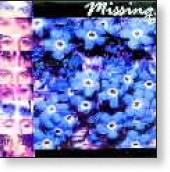
The cover of the CD, which is decorated with forget-me-not flowers and the eyes of several of the missing women, acknowledges the use of de Vries' words in the song.

Musgrave is married to acclaimed author and bank robber Stephen Reid, who is in jail for the botched holdup of a Victoria bank. She said Reid's struggles with heroin has made her more compassionate toward others with drug addictions, which she argues are more about "managing pain" than "having fun."

"You sort of have to know a little bit about how it affects families, and how addiction affects people to be able to talk about it," said Musgrave. "I'm plugged into grief and loneliness and all those things in my own life, in my own way."

When the CD was first produced two years ago, Cummer had intended for it to support a different charity but that didn't work out, he said. It has taken until now for him to settle on Haven House in Nanaimo, close to his Nanoose Bay home, after learning about it through acquaintances.

One thousand CDs have been produced and the proceeds will go to WillowWAI, a two-year-old Haven Society program that has partial local government funding but requires community support to continue.

The program, which has a $300,000 annual budget, offers three houses that women and children can live in for six months if they are homeless due to addictions, violence or sex-trade involvement; it assists homeless families, adults and children to find their own housing; and it provides drug recovery help and other services to develop life skills.

Missing is not the first song written in honour of Vancouver's missing women. More than 80 artists, including some of Canada's top musicians, collaborated on The Streets Where You Live in 2002 to raise money for a drug treatment facility in Vancouver.

lculbert@png.canwest.com

HOW TO ORDER THE CD

To get a copy of Missing:

- On the Internet: www.havensociety.com

- By phone: (250) 754-0764, payable by Visa or Mastercard

- By Mail:

Elizabeth Hume

c/o Haven Society

PO Box 311

Nanaimo, BC V9R 5L3

(Cheque or money order payable to Haven Society)

- Cost: $20 plus $2 for postage for mail anywhere in Canada

- - -

'WILL THEY REMEMBER ME WHEN I'M GONE?'

MISSING

By Susan Musgrave

Missing's a word that can't begin to describe

the way I miss you more each day;

You left to chase the wind on high

and the rain rained down to stay.

Will they remember me when I'm gone, you said,

when I've kissed goodbye to pain;

Or will their lives just carry on

in the small hours of the rain.

You may be lost in the eyes of the world,

but how can I set you free;

When there's a whole empty world in my aching heart,

you're the missing part of me.

Ruby Anne Hardy, Jacqueline McDonell, Jennie Lynn Furminger,

Sarah de Vries

Heather Bottomley, Andrea Joesbury, Marcella Creison, Dawn Teresa Crey

Elaine Allenbach, Debra Lynne Jones, Angela Arseneault, Lillian O'Dare

Mona Wilson, Michelle Gurney, Cindy Beck, Laura Mah

Sheryl Donahue, Wendy Allen, Julie Young, Teresa Triff

CHORUS

How far from home is "missing"?

In our prayers you're close beside us every

day;

When you left to chase the wind so high,

the rain moved in to stay.

Will they remember me when I'm gone,

you said,

when I've kissed goodbye to pain;

Or will their lives just carry on

in the small hours of the rain.

You may be an orphan in the eyes of the

world,

can we ever love anyone enough?

You'll always have a home in our loving

hearts,

You're the missing part of us.

Sheila Egan, Rebecca Guno, Angela Jardine, Brenda Ann Wolfe

Georgina Papin, Sherry Irving, Helen Hallmark, Tanya Holyk

Leigh Miner, Inga Hall, Patricia Johnson, Yvonne Boen, Tiffany Drew

Julie Young, Janet Henry, Dorothy Anne Spence, Ingrid Soet, Elaine Dumba, Sherry Lynn Rail

Jacqueline Murdock, Olivia Gale Williams, Catherine Gonzalez, Heather Chinnock

CHORUS

How far from home is "missing"?

In our prayers you're close beside us every

day;

When you left to chase the wind so high,

the rain moved in to stay.

Will they remember me when I'm gone,

you said, when I've kissed goodbye to pain;

Or will their lives just carry on

in the small hours of the rain.

How can we believe in a merciful world

that could never believe in you enough?

Take what strength you need from our

fearless hearts,

You're the missing part of us.

Taressa Williams, Diana Melnick, Kathleen

Dale Wattley, Catherine Maureen Knight

Wendy Crawford, Elsie Sebastien, Marnie Lee Frey, Stephanie Lane

Frances Young, Nancy Clark, Cindy Feliks, Dianne Rock

Kerry Lynn Koski, Sereena Abotsway, Andrea Borhaven, Maria Laliberte

Yvonne Abigosis, Verna Littlechief, Dawn Lynn Cooper, Linda Louise Grant

CHORUS

Missing means you're gone, I can't find you;

My dear one, I'll never hold you again.

You left to chase the wind too high

and the rain can't wash my tears away.

Will they remember me when I'm gone,

you said,

when I've kissed goodbye to pain;

Or will their lives just carry on

in the small hours of the rain.

You may have disappeared in the eyes of the

world,

but when I close my eyes I'll always see

your name, they way you smile, inside my

wishful heart,

The missing part of me.

Ran with fact box "How to order the CD", which has been appended to the end of the story.

© The Vancouver Sun 2006

Sunday, June 4

Report on women missing or slain in northern B.C. ready June 21

Canadian Press
Sunday, June 04, 2006

PRINCE GEORGE, B.C. (CP) - A report resulting from a conference on missing or slain women in northern B.C. will be made public on June 21.

The daylong conference looked at why, for years, women have been dying or disappearing along a remote stretch of highway dubbed the Highway of Tears.

"Due to the sensitive nature of the issues and the parties involved, as well as the continuing RCMP investigations, it is not yet available," Lheidli Tenneh Nation Coun. Rena Zatorski said in a news release.

RCMP, aboriginal groups, family members and politicians took part in the Highway of Tears symposium.

Since 1990, nine women - eight aboriginal - have been slain or are missing from communities that dot the largely remote Highway 16 corridor stretching almost 750 kilometres from Prince George to Prince Rupert.

The Prince George conference heard heartwrenching stories from families who for years have suffered the pain of not knowing what happened to their loved ones.

Some at the conference suggested the number of victims is closer to 35.

The meeting ended with aboriginal leaders vowing to form a Highway of Tears legacy group that will work toward improving emergency readiness and community support skills.

Police, who have yet to make a single arrest, have said they are looking at the possibility a serial killer is on the loose but don't have enough evidence to confirm that scenario.

At 14, Aielah Saric-Auger was the youngest of the victims. Her body was found in February near the highway outside of Prince George.

Also among the missing or dead are Saric-Auger, 14, Tamara Chipman, 22, Lana Derrick, 19, Ramona Wilson, 15, Delphine Nikal, 15, Roxanna Thiara, 15, Aleisha Germaine, 15, and Nicole Hoar, 25. Only Hoar, who has been missing for four years, is non-native.

Monica Ignas was 15 when she disappeared from the highway in December 1974 and 27-year-old Alberta Williams vanished on Aug. 27, 1989.

Cecilia Anne Nikal, a cousin of Delphine Nikal, has also been missing since 1989.

The B.C. government has contributed $50,000 to fund aboriginal-led projects that result from the conference.

"All parties fully anticipate that there will be substantial progress made regarding victim prevention, emergency planning, and counselling and support initiatives for both communities and families," Zatorski said.

© The Canadian Press 2006

Saturday, June 3

Cops not probing Tears tips, PI says

Private detective began looking into murder/disappearance cases during March

Ethan Baron
The Province

Friday, June 02, 2006

Police are failing to follow up on tips in the Highway of Tears case, says a Surrey private eye investigating the northern B.C. murders and disappearances.

Nine women and girls have vanished along 750 kilometres of Highway 16 between Prince George and Prince Rupert since 1990. Five were found dead. All but one of the nine are native.

Private detective Ray Michalko of Surrey began probing the case himself in March and travelled north after putting ads in local papers seeking information.

One man told him he called Terrace RCMP four years ago with a tip about a vehicle matching a description of one associated with missing tree-planter Nicole Hoar, 25, who vanished near Prince George in 2002.

"He saw the car, called the RCMP and was told by the Terrace RCMP that it wasn't their file," Michalko said. "He was told to call Prince George." When he called the number he was given, the man got an answering service twice and left messages, but never heard back, Michalko said.

A woman who found a broken tree-planter's shovel east of Terrace had her call to the RCMP "dismissed outright" by a civilian employee who took her call, Michalko said. When Michalko visited Terrace this year, he photographed the shovel and showed the picture to Hoar's parents, who told him it wasn't hers.

"It could've as easily been [Hoar's] shovel as not," he said.

Michalko, who served nine years as a Mountie in Manitoba and North Vancouver, believes the RCMP should create a Highway of Tears task force and select an officer in every community to take tips directly.

B.C. RCMP Cpl. Tom Seaman said all tips are taken seriously and followed up.

"Whether you use the term 'task force' or 'team of investigators,' we have a strong team of investigators working full time on these files," Seaman said.

Terrace RCMP Staff-Sgt. Eric Stubbs said civilian employees generally refer tips to the major-crimes officers in Prince George, who lead the investigation, but there may be communication problems between tipsters and those employees.

ebaron@png.canwest.com

© The Vancouver Province 2006

Thursday, June 1

B.C.'s Missing Women: Sarah's Story

B.C.'s Missing Women: Sarah's Story
Later this year the man accused of being Canada’s worst serial killer is expected to go on trial in British Columbia. Robert Pickton is accused of killing 22 women and disposing of their remains at his pig farm in Port Coquitlam. The victims were on a long list of women who began disappearing 20 years ago, most of them from Vancouver’s Downtown Eastside neighbourhood. We look at the tragic life of one of these women, Sarah De Vries, and at her family’s desperate search for justice.
http://www.cbc.ca/newsinreview/feb04/PDFs/sarah.pdf

Slain sex-trade workers remembered


Mike Sadava, CanWest News Service
Friday, May 19, 2006

EDMONTON - Fighting back tears, Theresa Innes's family looked on at a memorial service honouring her and other sex-trade workers who've been victims of violence.
Innes, whose body was found earlier this month near Fort Saskatchewan, Alta., was the 25th prostitute found slain in the Edmonton area since 1975. The body of another woman, whose identity has not been released, was found this week.

Cpl. Wayne Oakes said officers need to further investigative before they could comment on whether the 38-year-old woman was involved in the sex trade. The case remains in the hands of Project Kare, the RCMP task force investigating 84 cases of missing or dead men and women involved in high-risk lifestyles, including the killing of 13 female prostitutes since 1988.

A serial killer is responsible for more than one of those homicides, RCMP have said.
About 200 people gathered Thursday to remember the slain women and to try to raise awareness.

Innes's family has so far mourned privately, but they spoke publicly for the first time after the 45-minute service.

Her mother, Beverly Innes, said it meant a lot to her that so many people came and shared the truth that Innes was somebody's daughter and not simply a prostitute.
''She was a sweet giving person; she helped others; she was a good mother, a good daughter,'' she said. ''She didn't deserve to go because she always trying to help others.''

Innes is survived by two children, David, 12 and Michael, 18.

Her brother, Mike, and her common-law husband, Chad Quigley, who lived with her for 11 years, said street drugs had everything to do with her downfall.

''There would have been no Theresa the prostitute if it wasn't for crack cocaine,'' said Mike Innes.

Quigley said the first six years of their relationship were truly happy - until the drugs took over.

In January 2005, he found out she was turning to prostitution to support her drug habit.

''She approached me and asked me if it was all right. It was definitely not all right,'' he said.

''She was way more than a prostitute. My wife disappeared on me years ago. She sort of vanished away. I did everything I could to reassure her that she was a decent person and didn't have to resort to this, and that I was there to help her out.''
But she lost contact with him out of a combination of shame about what she was doing and pride preventing her from getting help, he said.

The two met in Nanaimo, B.C., and Quigley, who himself is a recovering drug addict, found her so bubbly and full of life that he instantly fell in love with her.

It's believed that Innes was killed in High Level, Alta., where she was apparently working in the sex trade, and her body stuffed in a hockey bag and brought more than 700 kilometres south to Fort Saskatchewan, 45 kilometres northeast of Edmonton, where her body was found May 7.

Thomas George Svekla has been charged in relation to Innes's death with second-degree murder and interfering with a dead body.

Beverly Innes urged any woman on the streets to contact their parents, ''so they know whether you're alive or dead.'
'
Two other mothers of slain prostitutes - Delia Quinney, the mother of Rachel Quinney, and Kathy King, mother of Cara King - were also at the service organized by the Prostitution Awareness and Action Foundation of Edmonton.

King recalled the words of Margaret Trudeau, who after the death of her son Michel in an avalanche, said she heard her son's voice saying he was no longer in the lake, but everywhere.

''We too can hear the voice of our women,'' she said.

''We are no longer in the ditch, or in the alley or the field or the trunk of a car. We are not even on the street corners. We are now present in sun that shines, in the stars that twinkle in the sky, in the wind and the rain and snow that falls upon earth E Let the memories of our short lives do some good, so that others can enjoy the peace and freedom we were denied.''

msadava@thejournal.canwest.com